Water Back–Up & Borehole Drilling Solutions
Thinking about getting a Water Back-Up or Borehole, but don’t really know how it works or where to start?
MMB Water Drilling can help!!!
Whether it’s your Residential, Commercial, Industrial or Farming Needs.
Contact Us To Schedule Your Geo Survey Today!
The 4 Step Water Borehole Drilling Process
We’ve all seen the Notice on walls and fences the suburbs over: “Borehole Water”.
Those whose fences, walls and gates boast the poster are the only ones whose lawns are still green, whose cars are pristine, and whose water bills are still lean… All thanks to a water borehole!
So, especially in these trying times, we all know what a borehole is and where the water comes from, or do we?
With the continuous municipal water costs going Increasing and water service interruptions, the people are getting tire and is fed up; it is now more important than ever to consider investing in alternative water and energy Solutions.
You Need Water Back – Up or a Borehole Solution Now What?
For some the decision to invest in a domestic water borehole is a simple one; others are daunted by the unfamiliar process.
In an effort to help you overcome the element of unfamiliarity, and thereby help our country more independent by making it easier for you to come to a decision to implement your own domestic water borehole this summer, MMB Energy is proud to help you better understand water borehole drilling.
So what are the steps in drilling a borehole? We’ll explain everything below.
Our Water Borehole Drilling Process In 4 Steps
Step 1 – Hydro-geologists site the borehole
The very first thing that needs to be determined is where the water is, and how we’re going to get to it.
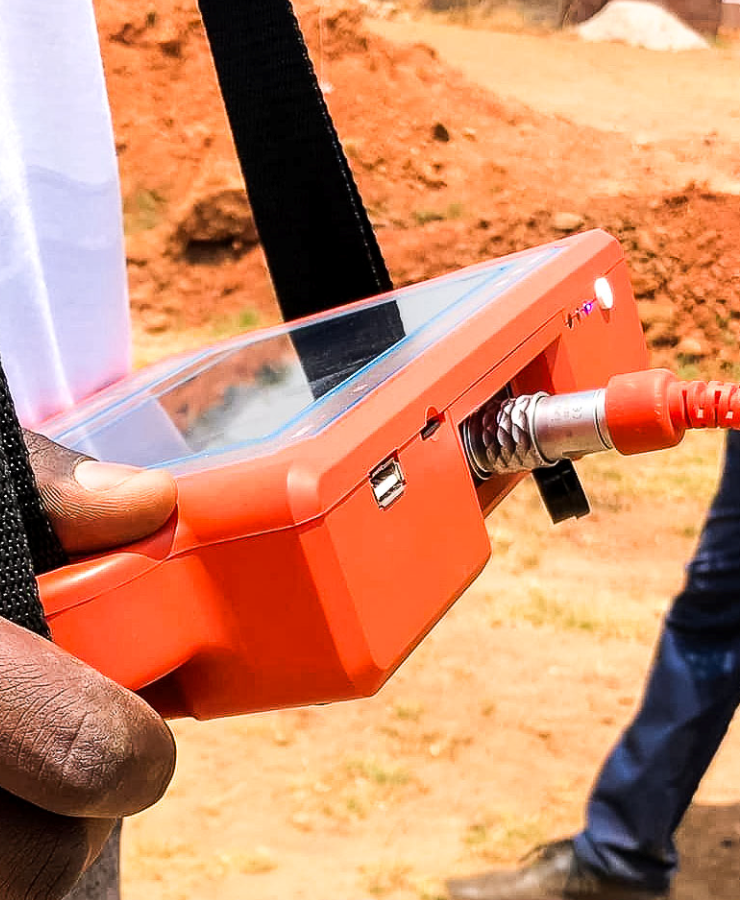
Our qualified hydro-geologists who make use of a variety of borehole drilling methods to assess the geophysical properties of the underlying area.
These are the guys that ensure we’re not drilling into natural hazards or man-made infrastructure (pipelines, cables, phone lines, etc).
Step 2 – Drilling and Construction
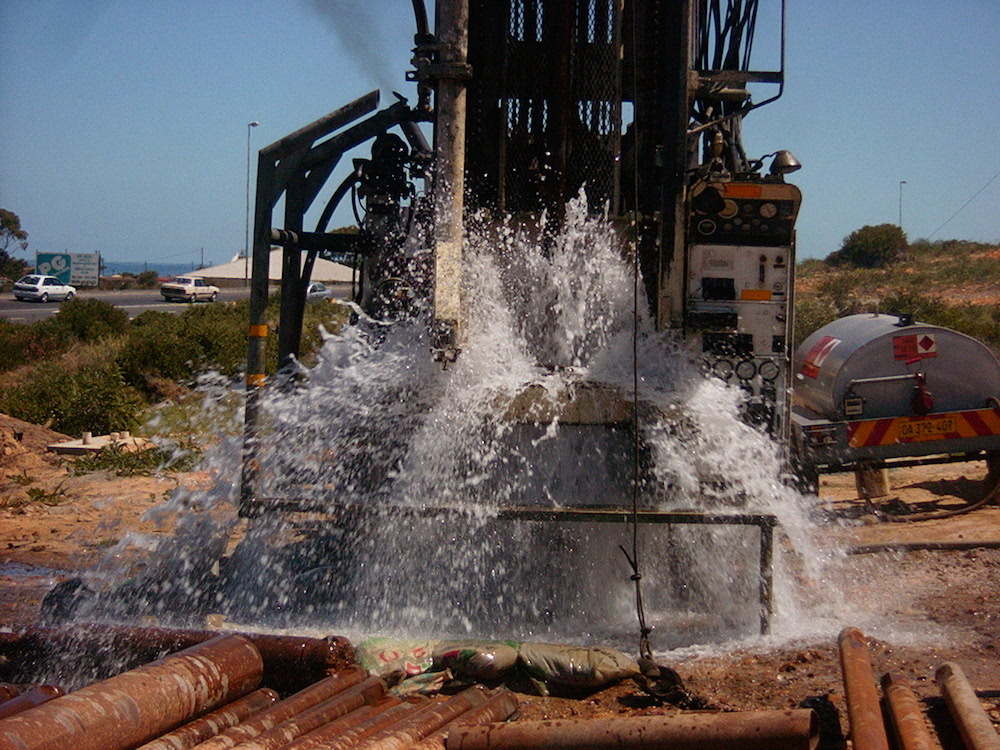
Once our hydro-geologists have paved the way for borehole drilling, we follow through and construct the borehole.
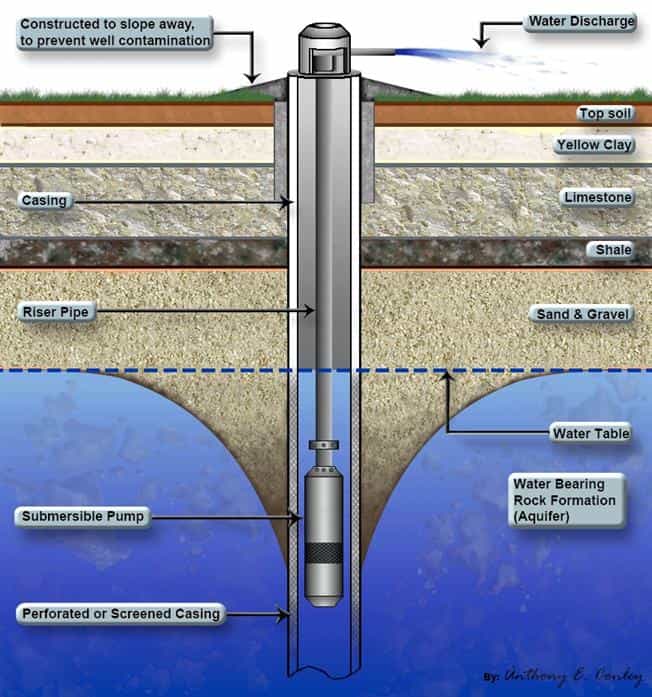
Once the borehole has been drilled the necessary unstable lengths of the borehole are steel cased in an effort to reinforce the ‘tube’.
Step 3 – Determining the yield of the borehole
In order to most accurately gauge the yield of a domestic water borehole an aquifer test is performed by a trained professional.
This includes but not limited to installing a test pump and pumping borehole water for a fixed set of variables; a specific time with a specific rate and then assessing the test’s impact on the water level in the borehole.
Maximum yield is accomplished by increasing the abstraction rate, ensuring optimum drawdown of water in the borehole.
Step 4 – Pumping and piping the borehole
The kind of pumping system and piping installed in your new domestic water borehole will largely depend on the intended use of the borehole water.
For more information, or to make an appointment to start the process, feel free to contact us via the Contact page or the Whatsapp Tab.
FAQ
How Is The Cost Of Drilling A Borehole Is Calculated?
Water borehole drilling cost depends on many different factors, processes and components used to drill a borehole.
There are no two boreholes that will be the same, so it is best to work on an average cost of a borehole.
The more boreholes you drill, the better estimates you can give a client.
Every borehole is unique, because the combination of factors that impact the components and processes used will almost always be different.
This is why borehole drilling cost is not just a number on a paper, but a carefully calculated formula affected by the conditions.
Water borehole drilling cost depends on many different factors, processes and components used to drill a borehole.
There are no two boreholes that will be the same, so it is best to work on an average cost of a borehole.
The more boreholes you drill, the better estimates you can give a client.
Every borehole is unique, because the combination of factors that impact the components and processes used will almost always be different.
This is why borehole drilling cost is not just a number on a paper, but a carefully calculated formula affected by the conditions.
What are the Most Important Factors that Impact Borehole Drilling Cost?
The type of ground and geology of the site where you want to drill a borehole are the biggest factor that will impact the borehole price.
It is very important to have a experienced borehole professional doing the geology research of the site correctly, whether it’s rock, sand or clay you are dealing with.
Another important factor will be the depth of the borehole, because groundwater will flow differently at different locations.
This again can be found by the research done by the geology prospector, so experience is key in order to get the most accurate estimates as possible.
What is the purpose of drilling a borehole?
There are not a one size-fits-all borehole solution.
This will also affect the water quality needed and the processes used to sink a borehole.
All these factors will then depend on which materials, machinery and what manpower is needed to get the borehole drilled.
Materials will include the physical construction for the borehole, machinery is the actual drill and the manpower is how many people you need to drill a specific borehole.
What Processes and Borehole Drilling Methods Should be Used?
The process of drilling a borehole will depend on the factors above and the geology experience of the drilling professionals.
It can be very expensive if the operator is not very experienced and could lead to mistakes, wasteful materials and it can be time consuming to do geology research on the site.
It’s also important to factor in the purpose of the borehole. Every type of borehole will have different methods, materials and manpower needed.
For example drilling different type of boreholes for example, a bottling plant, commercial site, residential site or a borehole for animals.
Another thing that’s important to keep in mind when calculating the price of a borehole is how much water is needed and for how long it is intended to use the borehole.
Some boreholes can be used for only a few years, where others can last for decades to come.
What Are The Basic Components for Calculating Borehole Installation Cost?
1. Siting the borehole location – It’s basically locating the best spot to drill a borehole that will have the best performance and water quality at the lowest cost possible.
2. Mobilisation and Demobilisation – Machinery, equipment and materials need to get to the site to be set up. This is the cost for moving the borehole drilling machinery and equipment to and from the site.
3. Borehole drilling cost per meter – Like explained above, every borehole will have a different depth depending on all the factors. The actual borehole drilling costs are usually calculated at a per meter cost. So the depth and type of ground will play the biggest role in getting a cost per meter.
4. Construction Material Costs – After the borehole has been drilled, the casing and completion tasks needs to be implemented. This cost can include materials like a solid casing, screen, gravel pack, sanitary seal and a well head.
5. Performance and Quality testing – The next step is well development, pump test and borehole water quality. That will determine the performance of the borehole (how much water is available) and the quality of the water.
6. Platform and Pump – Once everything has been finished, the borehole needs a platform and pump installed for it to be used. It depends on what the use is for the borehole to decide whether it will be hand pump or electrical pump.
This is the basic factors, processes and components that need to be included when calculating the costs of drilling borehole.
Now you have an idea what exactly it takes to figure out the cost of a borehole.